The Million-Dollar Oops: How to Rescue an Expired U.S. Patent
A missed maintenance fee can kill your million-dollar patent overnight. Discover exactly when USPTO payments are due, how grace periods work, and the brutal MPEP rules you must navigate to resurrect a long-dead patent before it’s too late.


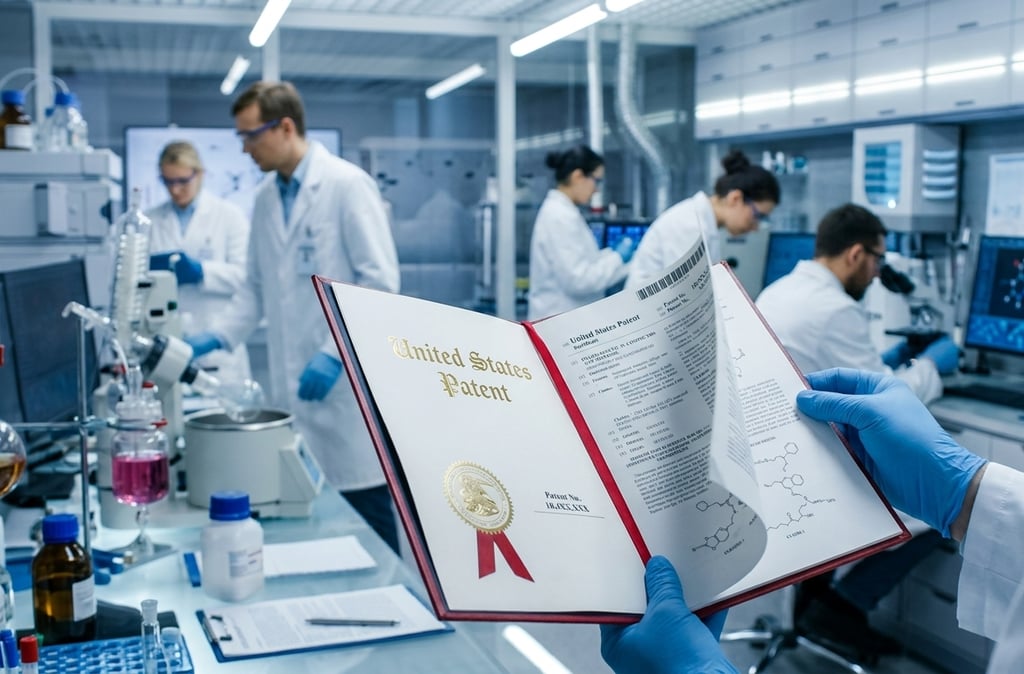
Picture this. You invented something groundbreaking, navigated the grueling examination process, and finally received that beautiful, ribbon-sealed United States Patent. You frame it on your office wall and get to work building your business.
Four years later, a massive competitor copies your exact product. You immediately reach out to enforce your rights, ready to shut them down, only to discover a terrifying reality: your patent is dead. It expired last month.
How did this happen?
It happens because of a little-known reality of the patent system: the USPTO does not just hand you 20 years of protection and walk away. To keep a utility patent alive, you essentially have to pay "rent" to the government. These payments are called Maintenance Fees, and forgetting them is one of the most common—and potentially devastating—mistakes an inventor can make.
But if you find yourself staring at an expired patent, don't panic just yet. The USPTO has built-in rescue mechanisms. Let’s unfold exactly how these fees work, the grace periods that can save you, and the extreme measures required to bring a long-expired patent back from the grave.
The Payment Windows: 3½, 7½, and 11½ Years
Unlike a magazine subscription, the USPTO won't automatically bill your credit card. The burden of tracking the deadlines is entirely on you.
The rulebook that governs all USPTO procedures, the Manual of Patent Examining Procedure (MPEP), sets the schedule in stone. Regarding exactly who has to pay and when, MPEP 2506 explicitly states:
"Maintenance fees are required to be paid on all patents based on applications filed on or after December 12, 1980, except for plant patents and design patents." It goes on to specify the exact deadlines, noting that the payments are due:
"3 years and six months (3½ years), seven years and six months (7½ years), and eleven years and six months (11½ years), after the date of grant for the original patent."
If you pay within the six-month window leading up to these anniversaries, you are perfectly fine. Your patent lives on to see another day.
The 6-Month Grace Period (The "Snooze Button")
What if the 3.5-year mark comes and goes, and you simply forgot?
Fortunately, there is a built-in "snooze button" that buys you a little more time. MPEP 2506 lays out this safety net:
"A 6-month grace period is provided by 35 U.S.C. 41(b) and 37 CFR 1.362(e) for payment of the maintenance fee with the surcharge..."
This means if your window closed at 3.5 years, you have until exactly the 4th anniversary of your patent's issue date to pay the fee. The catch, of course, is that hitting the snooze button costs money. You must pay the standard maintenance fee plus a hefty late surcharge.
If the 4th, 8th, or 12th anniversary of your patent strikes at midnight and you still haven't paid... your patent officially expires. It is thrust into the public domain, meaning anyone can use your invention for free.
Rescue Level 1: Reinstatement Within Two Years
Let's go back to our nightmare scenario. You realize your patent expired a month ago. Can you fix it?
Yes. The USPTO allows you to petition to bring the patent back to life, provided the mistake was truly an accident. Outlining the statutory authority for this rescue, MPEP 2590 states:
"The Director may accept the payment of any maintenance fee required by subsection (b) after the 6-month grace period if the delay is shown to the satisfaction of the Director to have been unintentional."
If your patent has been expired for less than two years, the process is relatively straightforward. You must submit the maintenance fee, a special petition fee, and a formal statement declaring that the delay was unintentional. Usually, the USPTO will not cross-examine you on this. You pay the fines, make the statement, and your patent is resurrected as if it never died.
Rescue Level 2: The "Over Two Years" Interrogation
Now, let's imagine a darker scenario. You moved overseas, lost track of your paperwork, and suddenly realize your patent expired three years ago.
Can you still rescue it? Technically, yes. But the procedural wall you have to climb is incredibly steep.
When a patent has been expired for more than two years, the USPTO no longer takes your word for it when you check the "unintentional" box. They require receipts. To understand how strict this is, MPEP 2590 issues a very clear warning regarding the burden of proof:
"While the Office reserves the right to request additional information whenever there is a question as to whether the delay is unintentional, a person filing a petition seeking reinstatement of an expired patent more than two years after the date of expiration for nonpayment of a maintenance fee is required to provide additional information of the facts and circumstances surrounding the entire delay..."
Notice the phrase "entire delay." This is where most petitions fail. You cannot just explain why you missed the original deadline three years ago. You have to prove, with documentary evidence, why every single day between the missed deadline and the day you filed the petition was an unintentional mistake.
MPEP 2590 hammers this point home without mercy:
"A person seeking reinstatement of an expired patent should not make a statement that the delay in payment of the maintenance fee was unintentional unless the entire delay was unintentional, including the period from discovery that the maintenance fee was not timely paid until payment of the maintenance fee."
If you realized the patent was expired in January, but you waited until June to file the petition because you were trying to raise money to pay the legal fees... that delay from January to June was intentional. The USPTO will deny the petition, keep your petition fee, and your patent will remain dead forever.
A Global Reality Check: The USPTO is Leniency Central
If that procedural wall sounds intimidating, take a deep breath. In the global context, the USPTO is actually notoriously lenient regarding reinstatement.
If you own patents in places like Japan (JPO), South Korea (KIPO), China (CNIPA), or Germany (DPMA), the "I forgot" or "my docketing system glitched" excuses simply won't cut it. These major jurisdictions generally operate under far stricter standards. To reinstate an expired patent in these regions, you often have to meet a standard closer to "all due care required by the circumstances" having been taken, or cite justifiable, unavoidable causes like force majeure. Simple human error or negligence by you or your agent is almost always fatal. The USPTO's "unintentional" standard, while demanding, is a comparative luxury that offers a vital lifeline many other global innovators simply do not have.
The Takeaway
Your intellectual property is only as strong as your docketing system. While the USPTO provides grace periods and petitions to cure your mistakes, relying on them is an expensive and highly stressful gamble.
Set calendar alerts, update your correspondence address with the USPTO whenever you move, and if you ever discover a missed deadline, act immediately. When it comes to the USPTO, the clock is always ticking.
Disclaimer: The content provided on S.K. Pulse is for educational and informational purposes only. I am a patent law professional, not a licensed attorney or registered patent agent. Nothing in this article constitutes legal advice or creates an attorney-client relationship. If you are facing an expired patent or missed deadline, consult immediately with a registered patent attorney.