Buying Time: How the PCT Buys You 30 Months to Conquer the World
Last Updated: June 2, 2026 by Simon K., Borderless Founder & IP Professional
Are you ready to take your million-dollar invention global? Do you have hundreds of thousands of dollars in liquid capital right now to hire foreign patent attorneys, pay exorbitant government fees, and translate your highly technical patent specifications into a dozen different languages?
What if you only have exactly 12 months to come up with that cash?
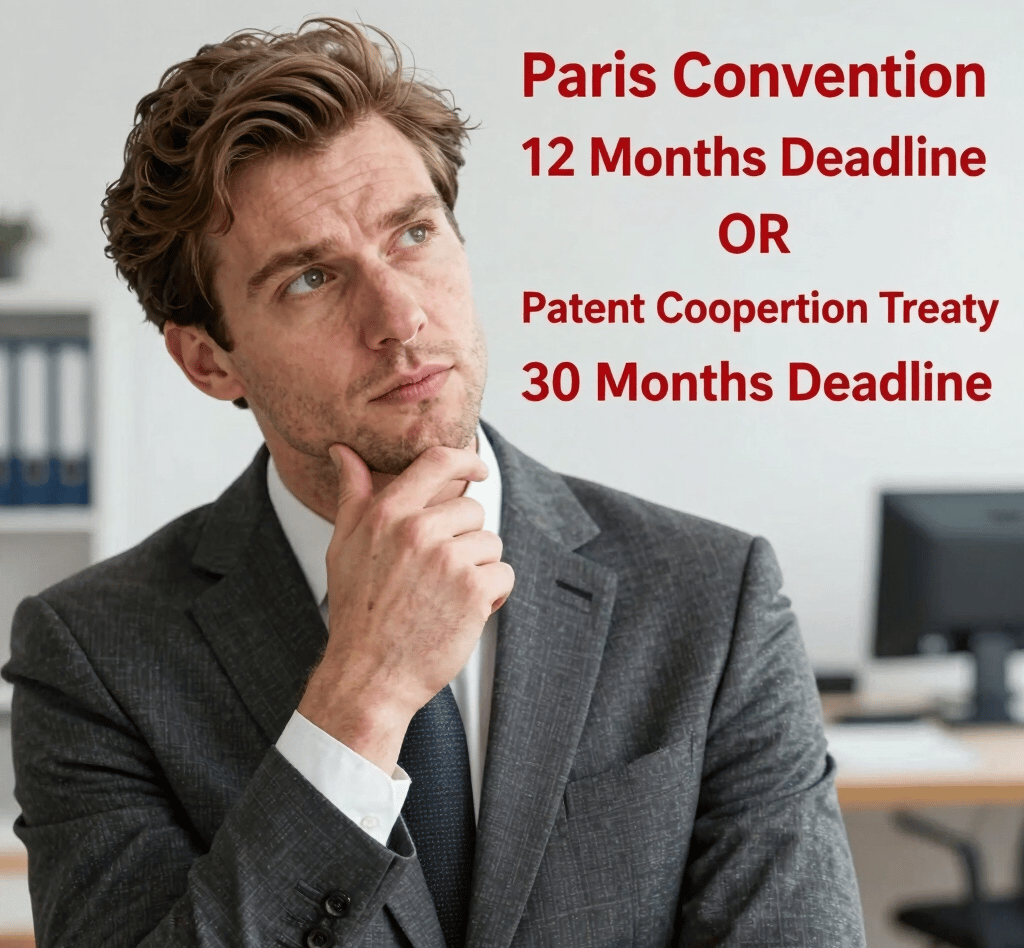
In the hyper-competitive world of intellectual property, time is your most brutal enemy. Once you file your very first patent application in your home country (establishing your “priority date”), a countdown timer immediately begins under the Paris Convention. You have exactly one year to file in any other country where you want your intellectual property protected.
For a massive multinational corporation, moving that fast is just another day at the office. But for a startup, a growing tech firm, or an independent inventor, raising massive capital and organizing international legal teams in a single year is almost impossible.
Fortunately, there is a strategic mechanism to hit the pause button on that deadline. Let’s explore how the Patent Cooperation Treaty (PCT) delays massive expenses, buys you critical time, and allows you to conquer the global market on your own terms.
The Myth of the “Worldwide Patent”
Before we look at the incredible strategic advantages of the PCT, we must address what the treaty does not do. This is where most inventors make a critical misunderstanding. In my personal experience working with global innovators, the demand for a “worldwide patent” is arguably the most frequent question I receive; a reality echoed by nearly every professional in the IP field.
If you ask a professional for a “worldwide patent,” they will immediately correct you, because no such thing exists in the realm of intellectual property. The Manual of Patent Examining Procedure (MPEP), which governs all United States Patent and Trademark Office (USPTO) actions, destroys this myth in its introductory section on the treaty.
MPEP § 1801 clearly states: “There is no ‘international patent.’ The PCT facilitates the obtaining of protection for inventions where such protection is sought in any or all of the PCT Contracting States. It provides for the filing of one patent application… which is then evaluated.”
The World Intellectual Property Organization (WIPO) will never grant you a single, global certificate that protects your invention worldwide. Instead, the PCT creates a two-phase system: the “International Phase” and the “National Phase.”
When you file under this treaty, you are initially filing a PCT International application. This is essentially the world’s most powerful placeholder. Later, you will have to convert it into individual PCT National applications (entering the National Stage) in each specific country where you actually want enforceable legal rights.
The Foundation: The 12-Month Paris Convention Rule
The PCT does not replace the Paris Convention; rather, it uses it as its foundational rulebook.
When you file your very first patent application, that date becomes your “priority date.” Under the Paris Convention, you have exactly 12 months from that priority date to file your foreign applications.
To use the PCT system to buy more time, you must file your PCT International application with WIPO before that original 12-month Paris Convention deadline expires. If you miss this 12-month window, the protective umbrella collapses, and your own initial filing will become prior art against you in foreign countries.
The 30-Month Reservation System
If you successfully file your PCT International application before the 12-month mark, something magical happens to your timeline.
By filing this single application, you are effectively telling WIPO and over 150 participating countries: “I haven’t decided exactly which specific countries I want to file a patent in yet, but hold my place in line based on my original priority date.”
This single international filing extends your terrifying 12-month deadline out to a massive 30 months (and in some jurisdictions, 31 months) from your original priority date. During this extended period, you can:
- Test the commercial viability of your product in different international markets.
- Secure venture capital funding or licensing deals to pay for upcoming legal fees.
- Finalize your manufacturing pipeline.
When the 30-month clock finally begins to run out, you must make your final decisions and file a PCT National application in each chosen country. The USPTO enforces this strictly.
According toMPEP § 1893.01: “PCT Articles 22(1), 22(2), and 39(1)(a) provide for a time limit of not later than the expiration of 30 months from the priority date… the U.S. national stage will commence upon expiration of 30 months from the priority date of the international application.”
If you miss that 30-month mark, your international placeholder vanishes, and your application is considered abandoned in those foreign jurisdictions.
The Rule of Three: Paris Convention vs. PCT
Because filing a PCT International application comes with its own set of WIPO transmittal, search, and international fees, inventors frequently ask: Should I always file a PCT application?
Not necessarily. You have to weigh those upfront international fees against your global business strategy. Here is the general rule of thumb used by IP professionals:
- The 1 or 2 Country Strategy (Direct Paris Convention): If you know with absolute certainty that you only want to expand into one or two specific foreign countries (e.g., South Korea and Japan), skip the PCT system. Hire local lawyers and file directly before your 12-month deadline. Adding the PCT step here just adds unnecessary administrative fees.
- The 3 or More Country Strategy (Use the PCT): If you plan to target three or more foreign countries, or if you simply have no idea what your global market will look like next year, the PCT is your best friend. The upfront cost of the PCT application is easily justified by the 18 months of breathing room it buys you, delaying massive, compounding jurisdictional costs.
Inside the 30 Months: Chapter I vs. Chapter II
Filing a PCT application also gives you a highly valuable sneak peek into the future of your invention. WIPO will assign an International Searching Authority (ISA)—usually a major patent office like the USPTO, EPO, or KIPO—to conduct an official search of existing global prior art.
This is done under “Chapter I” of the treaty. The ISA provides an International Search Report (ISR) and a Written Opinion (WO-ISA) detailing whether your invention is novel, non-obvious, and industrially applicable.
- The Bad Report: If the report finds severe prior art, you can simply walk away. Because you haven’t entered the National Phase yet, you just saved hundreds of thousands of dollars in translation and foreign attorney fees.
- The Borderline Report (Chapter II): You can invoke “Chapter II” by filing a demand for International Preliminary Examination, allowing you to submit claim amendments and argue with the international examiner.
- The Good Report: A clean report is pure strategic gold. While not legally binding on individual countries, most foreign patent offices heavily respect a positive PCT report, drastically speeding up your future examination process.
The Final Hurdle: Entering the National Phase
At month 30, the “International Phase” concludes, and the “National Phase” begins. This is where the real expenses kick in. For every single country where you want protection, you must now:
- Pay the official national filing fees for that specific patent office.
- Provide a certified translation of your entire patent specification into the official local language.
- Hire a locally licensed patent attorney to represent you before their patent office.
💡 Strategize Your U.S. National Stage Budget: If you are a foreign entity utilizing the PCT to enter the United States, or a U.S. founder budgeting your intellectual property runway, forecasting USPTO fees is critical. Use our interactive tool to model your exact operational costs:
Launch PCT U.S. National Stage Fee Estimator (Interactive Calculator)
The Takeaway
Filing a PCT International application is not a magical shortcut to a worldwide patent; it is a calculated, highly strategic business maneuver.
By understanding how the 12-month rule forces you to act, you can use the PCT to delay your heaviest expenses, preserve your global rights, and secure an early warning system regarding the legal strength of your invention. If you have global ambitions but a limited immediate budget, the 30-month placeholder provided by the PCT is undeniably the strongest strategic tool in your IP arsenal.
About the Author & Editorial Policy
Written by Simon K., a Borderless Founder and IP Professional specializing in U.S. and international patent frameworks. He leverages his experience running a remote California S-Corporation to provide actionable intelligence for global founders.
Disclaimer: Simon K. is a patent law professional and consultant, not a licensed patent attorney or registered patent agent. All content is for informational purposes only and does not establish an attorney-client relationship.