The Indochina Arbitrage: Shattering the Myths of the Southeast Asian Tech Basecamp
Last Updated: June 15, 2026 by Simon K., Borderless Founder & IP Professional
For years, the mainstream Western narrative surrounding the Indochina peninsula – encompassing Vietnam, Thailand, Cambodia, and Laos – was strictly framed around tourism, historical intrigue, or low-budget backpacking. If you told a Silicon Valley founder a decade ago that you were moving your tech consultancy to Da Nang or Chiang Mai, they would have questioned your internet connection and your ambition.
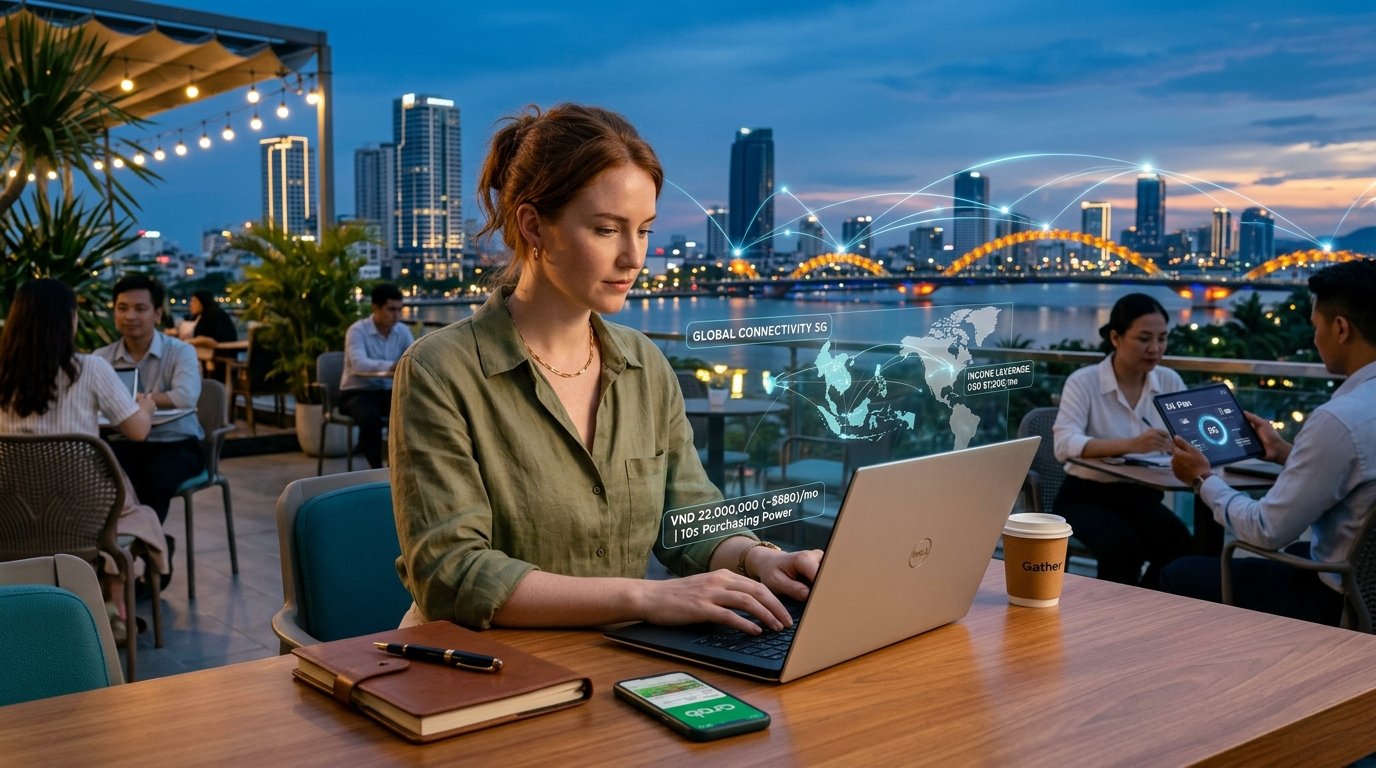
In 2026, the macroeconomic reality has completely flipped. We are witnessing an unprecedented, rapid migration of American and European tech founders, high-level consultants, and S-Corp operators relocating their physical basecamps to the Indochina peninsula. This is no longer a gap-year escape; it is a calculated, strategic relocation driven by brutal inflation in the West and a profound digital acceleration in the East.
Here is the closely guarded operational truth among global architects: the lingering myths about “developing” nations are dead. The digital age has leveled the playing field, creating an environment where earning U.S. dollars while operating from Southeast Asia offers the highest capital leverage on the planet.
Shattering the Infrastructure Myth (Technological Leapfrogging)
The most pervasive myth regarding Indochina is that a lower GDP inherently equates to broken infrastructure. This assumption ignores the macroeconomic concept of Technological Leapfrogging.
Western cities are often burdened by legacy infrastructure—century-old plumbing, aging electrical grids, and copper-wire telecommunications that are catastrophically expensive to upgrade. Indochinese urban centers largely bypassed this legacy phase. When they modernized over the last decade, they went straight to the top tier.
- The Connectivity Reality: Internet speed is a non-issue. Whether you are in a high-rise in Ho Chi Minh City, a coastal condo in Da Nang, or a café in Bangkok, gigabit fiber-optic connections and blanket 5G coverage are the baseline standards. (For context, independent monitors like Ookla’s Speedtest Global Index frequently rank Southeast Asian hubs above several major U.S. markets for fixed broadband speeds).
- The Urban Hardware: The modern living infrastructure—luxury high-rises with biometric security, integrated smart-home tech, and dedicated enterprise-grade coworking floors—is being built at a staggering pace to cater to a rising local middle class and foreign professionals.
The Digital Equalizer & The Talent Pool
If you want to understand the technological velocity of the peninsula, look at the local workforce. You will not find a population left behind by the digital age; you will find a hyper-connected, digitally native ecosystem.
Because the local population is so heavily integrated into the mobile-first economy, the daily operational services – delivery apps (Grab, Gojek), digital banking ecosystems, and on-demand logistics – are often more frictionless and advanced than what you find in Los Angeles or New York.
For the borderless founder, this also means access to an incredibly deep, highly capable local talent pool for outsourcing, development, and administrative scaling.
The 10x ROI: The Math of Geo-Arbitrage
The most compelling argument for the Indochina migration is the sheer mathematics of operational runway and geo-arbitrage.
In 2026, maintaining a baseline professional lifestyle in a Tier 1 Western city requires a minimum of $6,000 to $10,000 USD a month. That same OPEX (Operating Expense) on the Indochina peninsula does not just allow you to survive; it places you in the upper echelons of luxury.
By strategically structuring your U.S. S-Corp salary, utilizing the Foreign Earned Income Exclusion (FEIE), and relocating your physical footprint, you are effectively spending one-fifth of your revenue to match – and often vastly exceed – the quality of life in your home country.
- Corporate Runway: A premium, ocean-view apartment with fiber-optic internet costs between $500 and $1,200 a month. This drastic reduction in personal overhead means your S-Corp can survive market downturns that would bankrupt a California-based competitor.
- Time Recapture: The low cost of local labor means you can effortlessly outsource the friction of daily life. Cleaning, high-end meal prep, and logistics can be fully delegated for a few hundred dollars a month, buying back your cognitive bandwidth to focus entirely on scaling your business.
💡 The Arbitrage Caveat: Mind the Remittance Gap
While the cost of living is vastly lower, geo-arbitrage only works if you can efficiently move your U.S. dollars into local fiat (VND, THB) without bleeding capital to bank fees. If you are paying 4% in hidden FX spreads and ATM fees every time you pay your Vietnamese landlord, your arbitrage margin is severely damaged.
Before establishing your basecamp, use our Cross-Border Remittance True Cost Calculator to map out your exact capital extraction strategy and ensure you are routing your money through the cheapest possible API rails.
Launch the Remittance True Cost Calculator
The Practitioner’s Reality: The Frictionless Daily Spend
While macro-remittances cover your rent and corporate infrastructure, managing your daily coffee, food, and transit is surprisingly frictionless. From my personal experience operating across major hubs in Vietnam, Thailand, Cambodia, and Laos, a single credit card will seamlessly cover over 70% of your daily living expenses.
The mobile-first economy here is heavily integrated. You can link a U.S. credit card directly to local mega-apps like Grab (the Southeast Asian equivalent of Uber) to summon a motorcycle taxi or order food delivery for literally one-tenth of the cost of a U.S. ride. E-commerce platforms like Shopee also flawlessly process international cards for doorstep delivery anywhere in the region.
However, there are three absolute rules for your physical wallet:
- The Network Rule: It must be a Visa or Mastercard. Do not expect to survive on American Express or Discover; their acceptance rate is virtually zero outside of major international hotels.
- The Zero-Fee Mandate: You must strictly use a credit card with no foreign transaction fees. Standard U.S. cards will silently siphon off a 3% penalty on every single swipe, quietly destroying your hard-earned geo-arbitrage margins.
- The Cash Reserve: While convenience stores, supermarkets, and apps are fully digitized, you still need to carry a small stack of local currency. For an authentic night market dinner or an impromptu $10 foot massage, cash remains the undisputed king.
The Inevitable Gen Z Surge
While seasoned professionals and established founders are already quietly executing this strategy, the next massive wave is inevitable. The incoming demographic of remote workers faces a bleak Western macroeconomic reality: inaccessible housing markets and relentless inflation.
Armed with Applied AI tools that allow a single solo-operator to output the work of an entire traditional agency, this location-independent talent pool will increasingly look to the Indochina peninsula as their launchpad. Why struggle to pay $3,000 for a cramped studio in New York when you can build a global digital empire from a high-rise in Da Nang, banking and investing 80% of your U.S. income?
The Verdict
The global operational map has been redrawn. The Indochina peninsula is no longer just a place to visit; it is a premier destination to operate. For the borderless founder willing to discard outdated myths and embrace the digital realities of 2026, the region offers the ultimate competitive advantage: world-class infrastructure, unmatched capital efficiency, and the financial leverage to build on your own terms.
About the Author & Editorial Policy
Written by Simon K., a Borderless Founder and IP Professional specializing in U.S. and international patent frameworks. He leverages his experience running a remote California S-Corporation to provide actionable intelligence for global founders.
Disclaimer: Simon K. is a patent law professional and consultant, not a licensed patent attorney or registered patent agent. All content is for informational purposes only and does not establish an attorney-client relationship.