The Exospheric Tech Stack: Orbital Data Centers, Asteroid Mining, and Big Tech’s Final Frontier
For the past twenty years, the term “Tech Stack” referred exclusively to software architecture—the layers of code, databases, and cloud hosting required to run a digital enterprise. As we push deeper into 2026, the definition has fundamentally changed. The ultimate tech stack is no longer just digital; it is physical, and it is rapidly migrating off-planet.
The aerospace industry is no longer the exclusive playground of government agencies or eccentric billionaires fulfilling childhood dreams. It has become a brutal, hyper-competitive infrastructure race among Big Tech companies. Why? Because the terrestrial limits of our digital ambitions have been reached.
If you want to understand the macroeconomic future of technology, supply chains, and global capital, you must look beyond the atmosphere. Here is the reality of the exospheric tech stack, the earthly limits of artificial intelligence, and why mining an asteroid is the next logical step for the semiconductor industry.
The Earthly Limits of the AI Industry
To understand why Big Tech is looking to space, you must first understand the crisis on the ground. The explosion of Artificial Intelligence, specifically the training of massive language models and autonomous systems, has hit a physical ceiling.
AI does not live in the abstract “cloud”—it lives in hyperscale data centers that require mind-bending amounts of resources. We are currently colliding with two terrestrial limits:
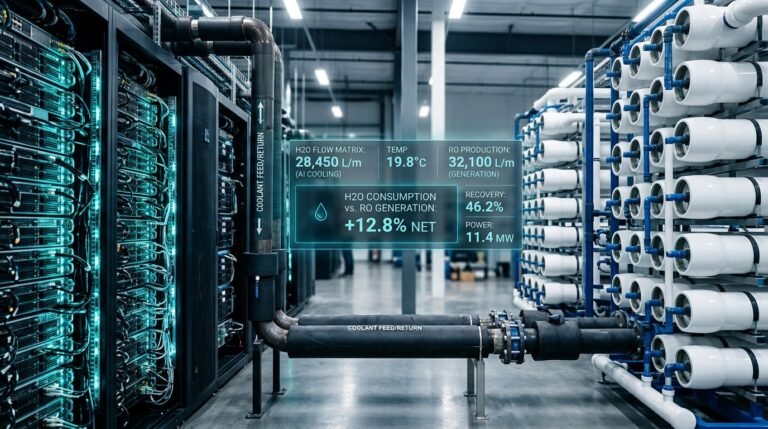
1. The Gigawatt Bottleneck: Training next-generation AI models requires power equivalent to small cities. Earth’s electrical grids, already strained by legacy infrastructure and the EV transition, simply cannot generate and distribute enough continuous, reliable power to sustain the projected growth of the AI sector without reverting entirely to heavy fossil fuels. 2. The Thermal Cap: As discussed in our review of desalination, AI servers run incredibly hot. Cooling them requires millions of gallons of fresh water and massive air-conditioning arrays. We are running out of physical land that offers both cheap electricity and abundant water.
The Earth is too warm, too crowded, and too power-constrained for the future of artificial intelligence.
The Ultimate Solution: Data Centers in Space
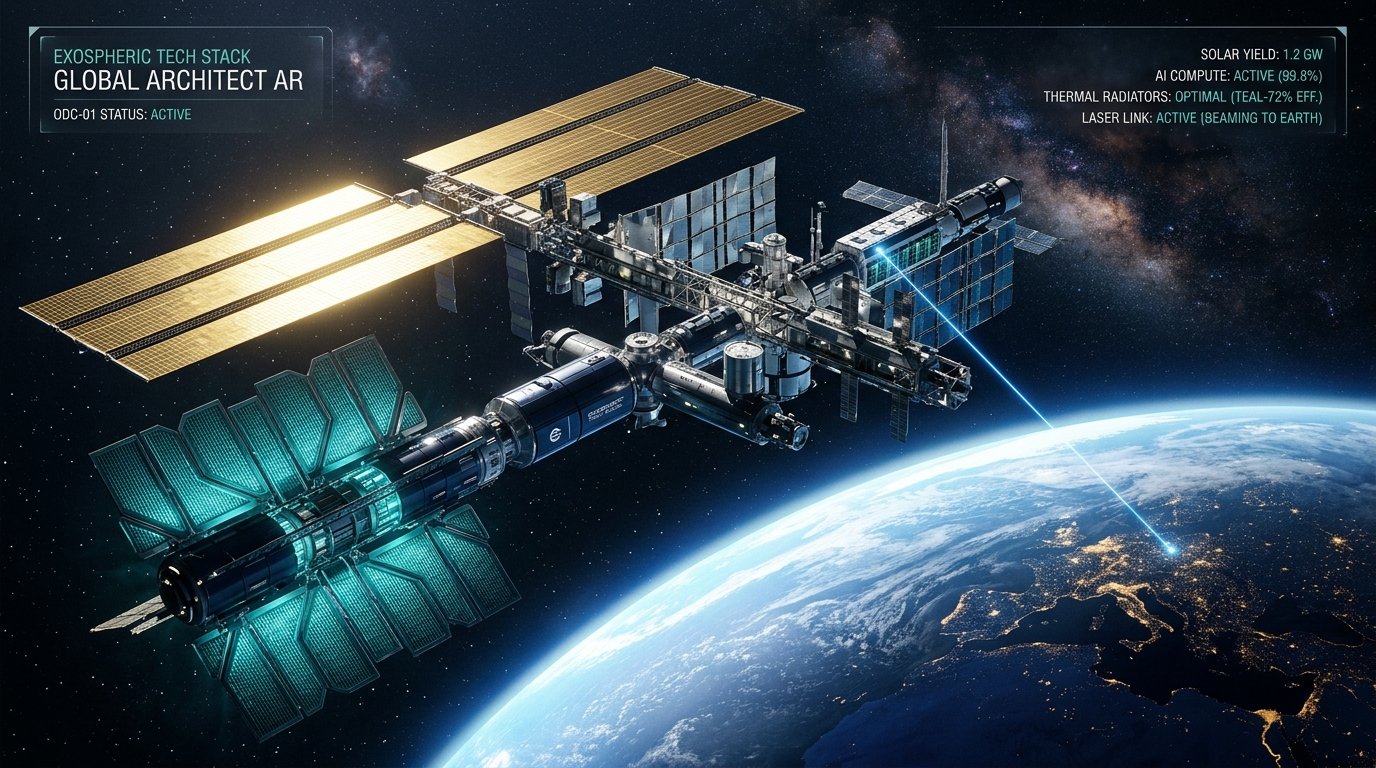
If the problem is power generation and physical space, the solution is moving the data centers into Low Earth Orbit (LEO) or deploying them on the lunar surface. While it sounds like science fiction, aerospace consortiums (such as the European Space Agency’s ASCEND study) and private startups like Lonestar Data Holdings are actively building this architecture today.
The Engineering Reality:
- Uninterrupted Solar: In space, there is no weather, no atmospheric diffusion, and no night cycle if positioned correctly. An orbital data center can deploy massive solar arrays to harvest pure, uninterrupted photovoltaic energy 24/7.
- The Cooling Paradox: Space is freezing, but it is also a vacuum. Because there is no air, you cannot use traditional fans to blow heat away (convection). Instead, orbital data centers must use massive radiators to bleed the heat generated by AI servers directly into the deep freeze of the cosmos as infrared radiation.
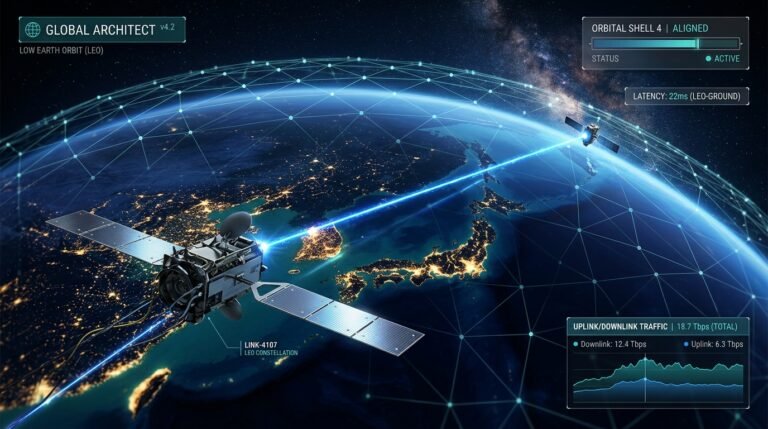
- The Transmission: You do not beam the raw data up and down. You send the raw query up via high-speed laser links, the orbital AI processes the massive computation using unlimited solar power, and it beams only the lightweight answer back down to Earth.
Why Big Tech is Going to War Over Aerospace
This is why companies like Amazon (Project Kuiper), Google, and Microsoft (Azure Space) are pouring billions into aerospace. They are not interested in space tourism; they are fighting for control of the ultimate infrastructure.
If Amazon or Microsoft can offer enterprise clients access to a space-based, solar-powered, highly secure orbital cloud, they bypass earthly power grids and localized regulations entirely. The company that controls the orbital data mesh controls the nervous system of the 2030s global economy. The aerospace industry is so competitive because it is the only sector capable of physically delivering Big Tech’s next phase of growth.
Intercepting the Asteroid: The Rare Earth Mandate
The other critical choke point for the tech industry is material. The advanced semiconductors required for AI, EVs, and modern military tech require Rare Earth Elements (REEs) and platinum-group metals.
Currently, terrestrial mining for these elements is incredibly toxic, geographically concentrated (heavily dominated by China), and finite. The solution to this supply chain vulnerability is asteroid mining.
The Interception Tech: Near-Earth Objects (NEOs) are essentially flying, trillion-dollar mines. A single metallic asteroid, like 16 Psyche, contains enough nickel, iron, and precious metals to crash the global commodities market. Startups in 2026 are not planning to send human miners like in the movies. The technology relies on autonomous robotics.
- Interception: Small, AI-piloted probes use ion thrusters to rendezvous with an asteroid.
- Optical Refining: Using concentrated solar mirrors, the probe superheats the surface of the asteroid, vaporizing the rock and separating the heavy, valuable metals in zero gravity.
- The Return: The refined material is packaged into a ballistic reentry capsule and dropped safely back to Earth, bypassing the need for toxic terrestrial refinement.
The SpaceX IPO: A Black Hole for Global Capital
Hanging over this entire orbital economy is the eventual, highly anticipated Initial Public Offering (IPO) of SpaceX, or the spin-off of its Starlink division.
When SpaceX finally opens to public markets, the macroeconomic impact will be staggering. It will not just be an IPO; it will act as a financial black hole, drawing massive amounts of capital away from legacy aerospace contractors (like Boeing and Lockheed Martin) and traditional tech stocks.
For the global economy, a liquid, publicly traded SpaceX validates the space economy as a standard asset class. It will trigger a massive wave of secondary funding for smaller startups building the software, robotics, and logistics to support the orbital infrastructure. It will mark the exact moment when “aerospace” transitions from a speculative venture into the foundational bedrock of the global supply chain.
The Verdict
The boundaries of business are no longer drawn on a map; they are dictated by gravity. For the borderless founder and the global architect, understanding the space industry is no longer a hobby—it is a requirement for understanding where global capital is flowing. The infrastructure of tomorrow is being launched today.