The 2026 Autonomous Arsenal: AI, Drone Economics, and the New Global Defense Hierarchy
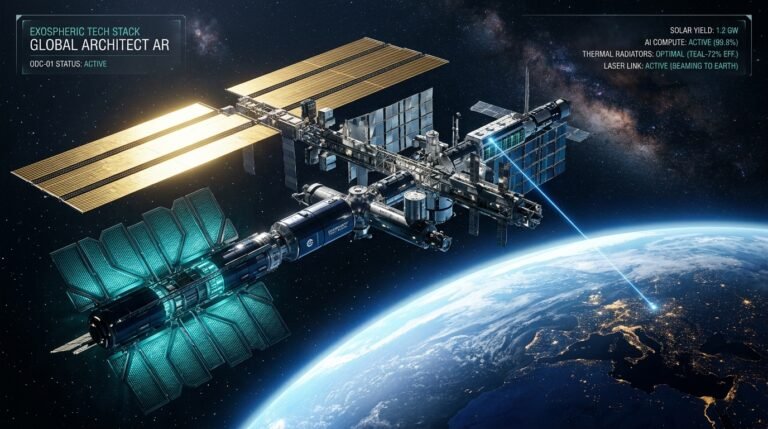
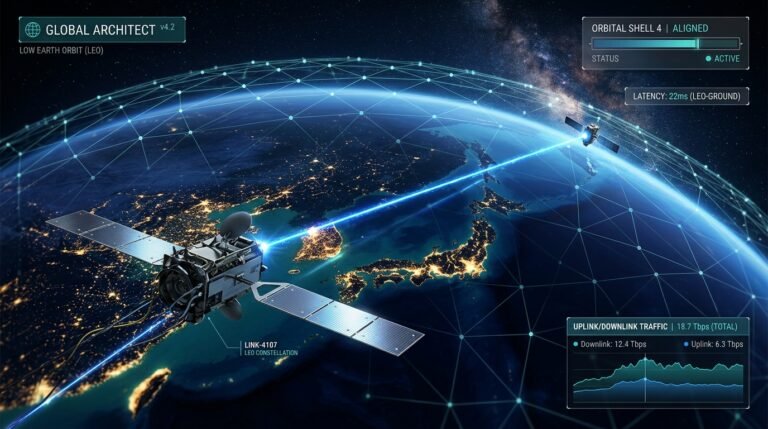
The nature of global deterrence has fundamentally shifted. If you want to understand the geopolitical reality of 2026, you cannot look at troop counts or legacy naval fleets; you must look at the military “Tech Stack.”
Modern warfare is no longer exclusively a contest of heavy industry; it is a contest of software iteration, algorithmic superiority, and supply chain agility. The active combat zones spanning from the plains of Eastern Europe to the skies over the Middle East have acted as the most brutal, high-stakes technology incubators in human history.
For the global founder, supply chain consultant, or macro-investor, understanding the defense sector is no longer optional. The technologies being forged in these conflicts—autonomous systems, advanced interception, and edge AI—will inevitably bleed into commercial logistics, cybersecurity, and aviation. Here is the 2026 reality of the global military tech market.
The Export Hierarchy: South Korea’s Ascendance
The global arms export market has historically been an exclusive oligopoly dominated by the United States, Russia, and France. However, as the Russian defense industry collapsed under the weight of its own domestic supply needs and sanctions, a massive vacuum opened in the mid-tier defense market.
In 2026, South Korea has aggressively filled that void, emerging as the undisputed “surprise star” of the global defense export market. Their competitive advantage is a Silicon Valley-style approach to manufacturing: rapid delivery, cost efficiency, and total technological transfer.
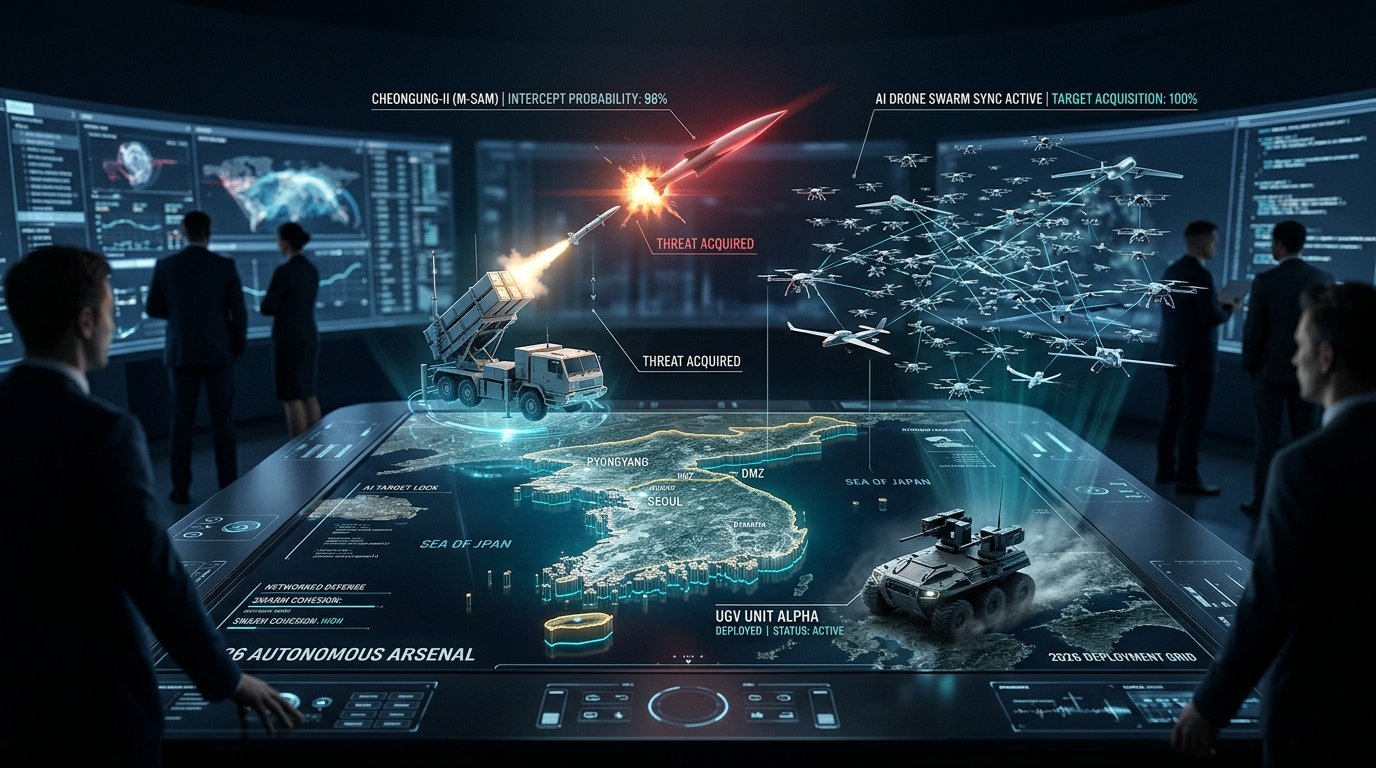
The Middle Eastern Validation: The turning point for the South Korean defense sector occurred in the skies over the United Arab Emirates. During complex, multi-layered drone and ballistic missile attacks launched by Iran and its proxies, the UAE deployed the South Korean-made Cheongung-II (KM-SAM Block II) medium-range air defense system.
The results shattered industry expectations. Operating in a highly contested electronic warfare environment, the Cheongung-II achieved a staggering 96% interception success rate. Beating a 90% threshold against irregularly maneuvering ballistic missiles and synchronized drone swarms is incredibly rare. Because it costs a fraction of the U.S. Patriot system and has now been rigorously combat-proven, South Korea is dominating the global demand for missile interception technology, rapidly securing emergency supply requests across the Middle East and gaining serious traction in Europe.
The Ukraine Paradox: The Birth of a $6.8B Drone Economy
The most paradoxical economic reality of the 2020s is happening in Ukraine. Under the duress of a full-scale invasion, the country did not just import weapons—it built one of the most dynamic, high-growth defense tech ecosystems on the planet.
By 2025, Ukraine’s domestic defense technology market hit an estimated $6.8 billion. It is a masterclass in hyper-agile manufacturing and decentralized procurement.
The Shift to Domestic Automation: Instead of relying entirely on Western supply chains, Ukraine actively pivoted inward. By late 2025, the share of defense contracts awarded to domestic Ukrainian manufacturers skyrocketed to 82%.
- The Scale of the Sky: Ukraine’s domestic drone industry has moved from a niche, volunteer-driven effort to massive serial production, with the state procuring millions of drones annually.
- The Rise of Ground Robotics: The most explosive growth vector is no longer just in the air. The market for Unmanned Ground Vehicles (UGVs)—used for autonomous supply delivery, medical evacuation, and frontline combat—exploded by nearly 500% in a single year.
Ukraine has essentially created a wartime Silicon Valley, where iteration cycles for loitering munitions and reconnaissance platforms take weeks, not years. This domestic boom is drawing massive international venture capital, as investors realize these battle-tested systems will define the future of NATO’s border security.
AI in the Kill Chain
The defining characteristic of the conflicts involving Ukraine, Russia, Israel, Iran, and the U.S. is the complete integration of Artificial Intelligence into the “kill chain” (the process of identifying, tracking, and destroying a target).
We have moved past the era of remote-controlled drones. The 2026 battlefield is defined by electronic warfare (EW). Because jamming and signal disruption are ubiquitous, drones cannot rely on GPS or constant radio contact with a human operator.
The Autonomous Edge: To counter signal jamming, both state militaries and agile startups are deploying edge AI directly onto the drones. Using machine vision and inertial navigation, these systems can fly into a heavily jammed electronic “dead zone,” independently identify a pre-programmed target (like an armored vehicle or an artillery radar), and execute a strike without a human ever pulling the trigger.
Furthermore, software-defined electronic warfare platforms are using AI to instantly analyze incoming enemy radar frequencies and selectively jam them in real-time. War in 2026 is, at its core, a clash of competing algorithms.
The Verdict
The military tech stack has fundamentally decoupled from the traditional bureaucratic defense models. The nations and alliances that will dominate the coming decade are those capable of merging high-end software development with hyper-agile hardware manufacturing. Whether it is South Korea intercepting hypersonic threats or Ukraine building autonomous robotic ground forces, the lesson for the global architect is clear: speed of iteration is the ultimate deterrence.